
As the ink dries on the Gaza peace deal, there is no sign of Israel’s annexation of the West Bank coming to an end.
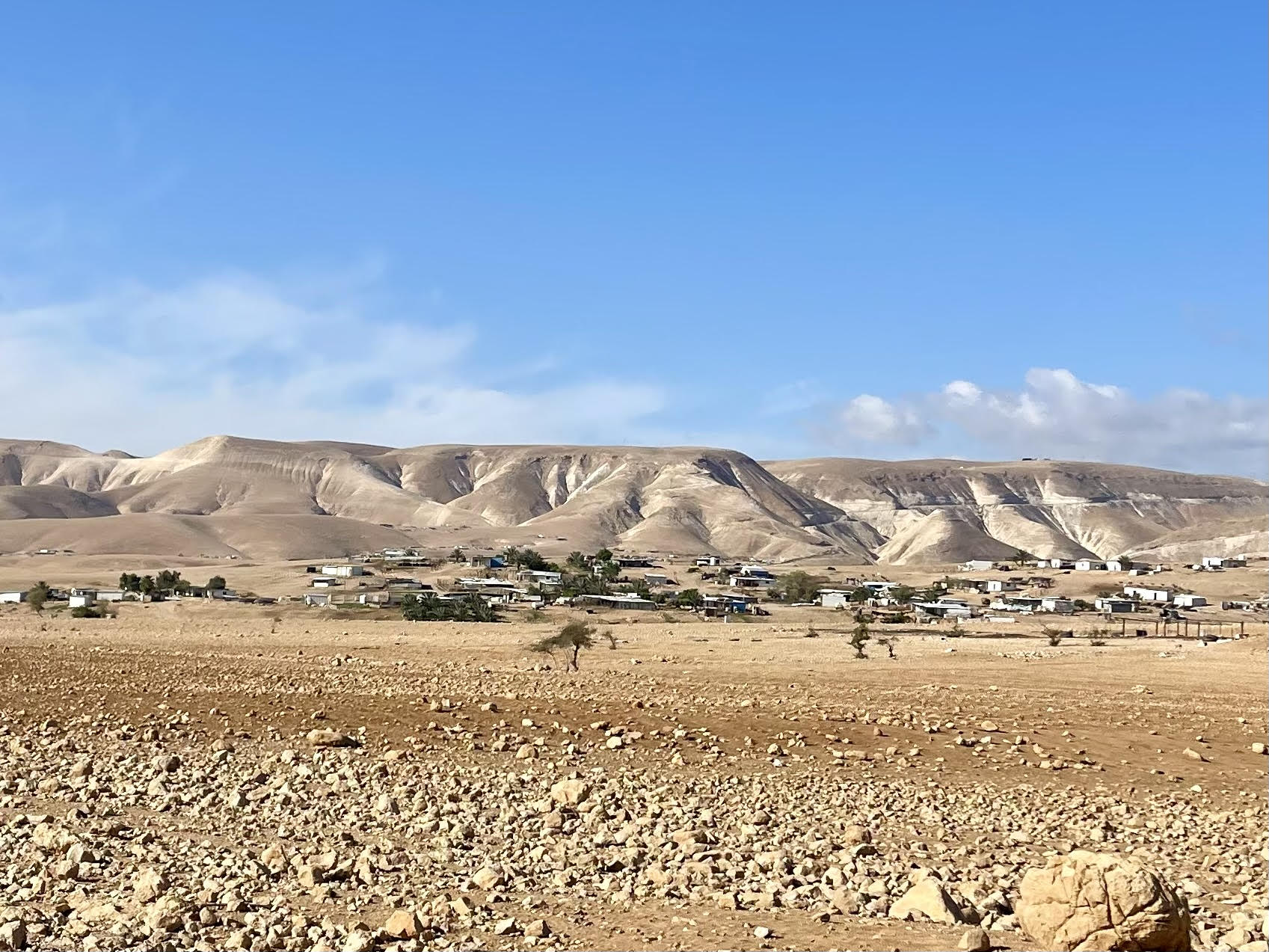
We are sitting in the shade of a huge Syrian ash tree in the centre of the community of Ras ‘Ein Al ‘Auja in the Jordan Valley and Ahmed, a local famer, is telling me about a recent settler attack on his local community and their ongoing struggle to simply stay in their homes.
In March, in attack by dozens of Israeli settlers supported by the Israeli army and police, 1,500 sheep were stolen from his community.
“I spent 27 years building up my flock, only to see it disappear in 20 minutes. A community’s livelihood vanished with no warning and no way to stop it,” said Ahmed.
Israeli peace activists on the ground at the time tried to prevent the theft and tracked the stolen sheep to Israeli settlements. The Israeli police refused to take reports from all the victims and investigation into the reports they did take were closed within three days, according Israeli human rights group, Yesh Din.
Since then, settler attacks and harassment in Ras ‘Ein Al ‘Auja intensifying. An irrigation project was destroyed within days of completion; the pipes torn out of the ground with tractors and chains. In June, settlers ploughed Palestinian land used to grow feed for livestock during the hot, dry summer months, prompting fears that they will come back this month to try and plant crops in it.
The community’s water source has also been targeted. For centuries, the Al-Auja spring has provided fresh water to local Palestinians. This was until it as diverted by settlers who piped water from the spring to the illegal Israeli settlement of Yitav and to Zohar outpost, an informal settlement illegal under both international and Israeli law. As a result, the spring that once supplied the village is now dry. The community has to bring in water by tanker from a village four miles away.
The International Court of Justice in its July 2024 Advisory opinion deemed Israel’s actions in the West Bank and East Jerusalem – including settlement expansion, construction of infrastructure and the separation wall, exploitation of natural resources – constitute annexation.
The Israeli government has been actively pursuing its annexation policy since the formation of Prime Minister Benjamin Netanyahu’s coalition government in late 2022. These efforts are spearheaded by Finance Minister Bezalel Smotrich, a prominent figure in the far-right religious Zionist Party.
Israel has transferred administrative powers over the West Bank from the military-run Civil Administration to a civilian body under Smotrich’s control. This move effectively places the West Bank under Israeli civilian governance, signaling a transition from temporary occupation to permanent control.
The Israeli government has approved thousands of new housing units and legalized previously unauthorized outposts. The starkest example is the recent approval of the long-frozen E1 settlement plan in August 2025, which threatens to split the West Bank in two, destroying the prospect for a viable Palestinian state.
Israel has designated vast areas of the West Bank as “State land,” facilitating further settlement expansion and removing legal ownership of land from Palestinians. Notably, in June 2024, approximately 3,100 acres in the Jordan Valley were declared state land, marking the largest such seizure in over three decades.
The impact of this annexation in the Jordan Valley according to Israeli peace organisation Peace Now is: “Approximately 47 Palestinian communities have been forcibly displaced since October 2023 due to settler violence. This includes at least 300 Palestinian families (around 1,762 individuals) who lost their homes (data from Kerem Navot and OCHA).”
What these policies mean for the people of Ras ‘Ein Al ‘Auja in everyday life is that they are surrounded on three sides by land that has been designated as either an Israeli military firing zone, a ‘border zone’ or a ‘nature reserve’ – all areas from which Palestinians are barred while Israeli military and Israeli citizens retain access.
The land where they traditionally grazed their sheep and goats is no longer accessible to them. As Mariam told me: “Our space is shrinking every week. You can’t cross the road to graze the animals on our land because the settlement security has forbidden it. We can’t take the sheep into the mountain because it is a closed military zone. They are trying to starve us out of our homes so that they can take our land.”
The entrance into the community from the main road is often blocked by settlers who are equipped with all-terrain vehicles supplied by the Israeli Ministry of Settlements. There have been a number of physical assaults on community members and on human rights monitors working to support them.
Intimidation is a daily occurrence. Settlers drive ATVs into and around the community at speed, terrorizing children, the elderly and livestock. They frequently walk into barns and take note of what livestock families have. Sheepdogs have been stolen, run over or shot. In a five-day period in June, electricity lines in the community were cut three times.
Settlers from the nearby outpost and settlements have told the community it is “forbidden” to graze in other areas. This prohibition has no basis in law, but it is enforced by heavily armed settlers with the support of the Israeli military.
Israeli human rights organisation Yesh Din’s research corroborates this: “The data indicates that the Israeli authorities are unable or unwilling to enforce the law on Israelis who harm Palestinians and their property in the OPT, granting them immunity for acts of violence, including assault, beating, use of firearms, stone-throwing, threats, arson, theft, harming crops and different types of vandalism.”
For the families of Ras ‘Ein Al Auja, these annexation policies have resulted in a shrinking of their farmland, a complete removal of the rule of law, limited access to water and power and daily violence and intimidation. All these acts are designed to make it impossible to continue living there in order to force the families from their homes so the land can be annexed by Israel.